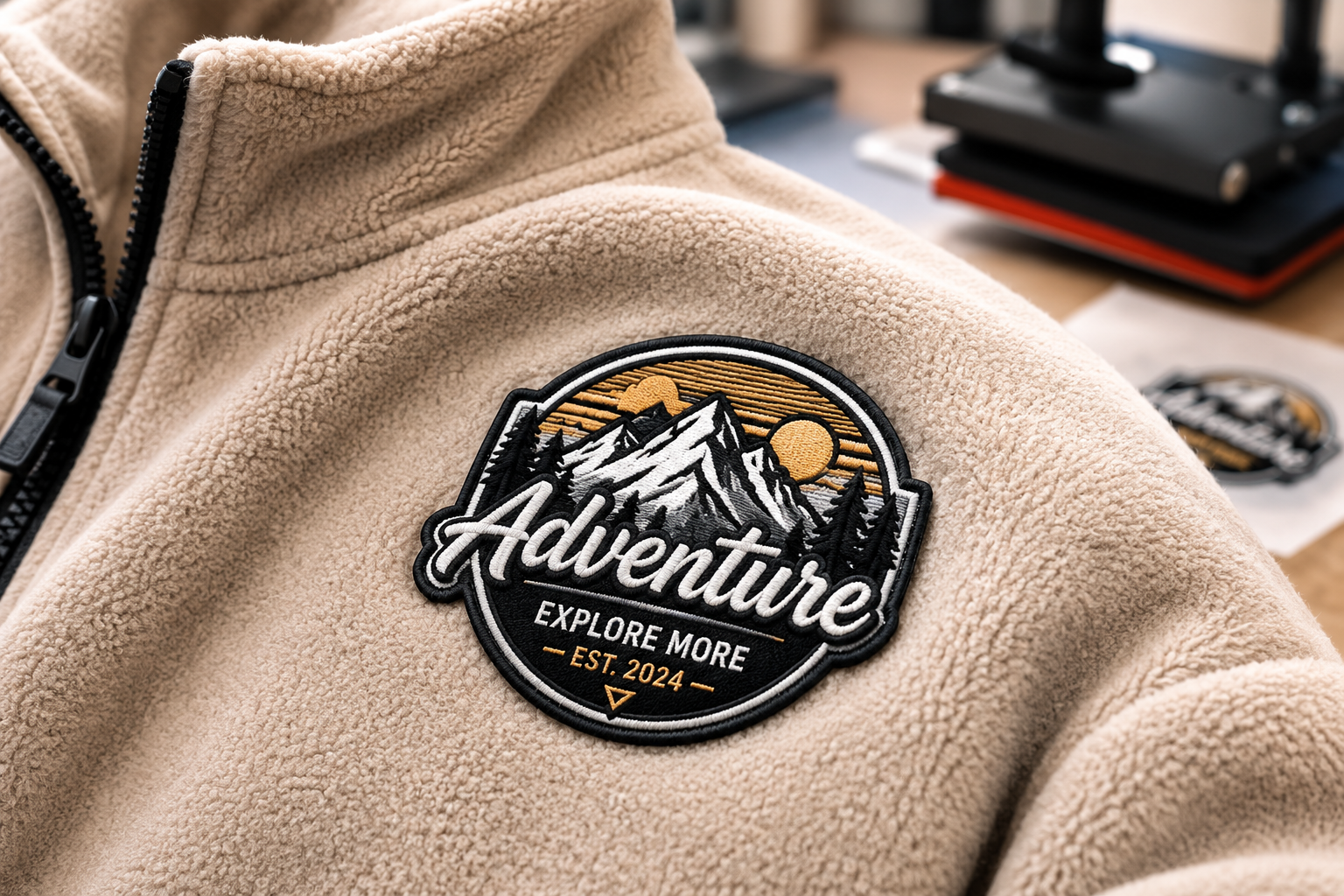
Yes, iron-on patches work on fleece — but fleece is more heat-sensitive than cotton or denim, so getting the settings right matters more than usual. Too much heat and the fleece can flatten or turn shiny where the iron touched it. Too little, and the patch won’t bond and will peel off after the first wash.
Here’s exactly how to do it right.
Heat Press Settings for Fleece
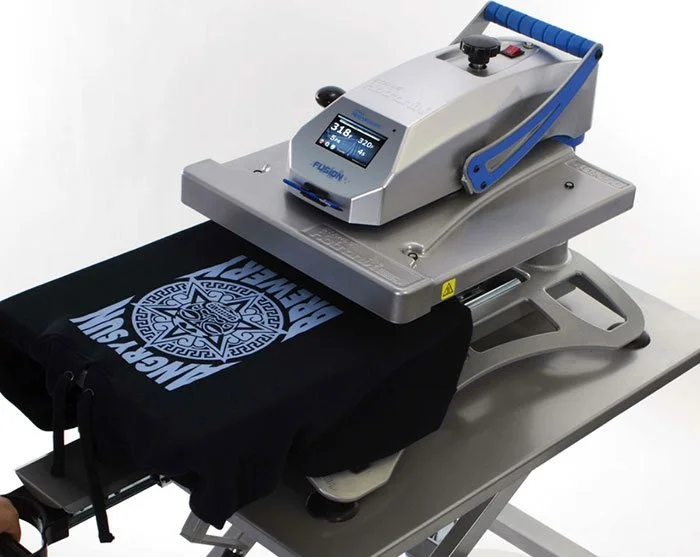
Temperature: 300°F / 150°C
Time: 15 seconds
Pressure: Medium
Place the patch on the fleece, then cover it with a Teflon sheet or parchment paper before pressing. Never press directly on the patch or the fleece — the barrier protects both.
Using a Handheld Iron Instead of a Heat Press
No heat press at home? A regular iron works too, using the same temperature:
- Set the iron to 300°F / 150°C
- Press down firmly for 15–20 seconds — don’t slide the iron around, hold it in place
- Make sure even pressure reaches the whole patch. For larger patches, press different sections separately rather than trying to cover the whole thing unevenly in one go
What to Watch Out For
Fleece needs a gentler touch than most fabrics. A few things to keep in mind:
Don’t overdo the heat or pressure. Too much of either can flatten the fleece fibers or leave a shiny mark where the iron sat.
Let it cool completely before wearing. The adhesive needs to set. Moving or stretching the fabric while it’s still warm can weaken the bond before it’s fully cured.
Check the bond gently once cooled. A light tug at the edge will tell you if it’s held — but don’t pull hard trying to test it, since that can lift an edge that would have otherwise set fine.
If it hasn’t bonded, press again with slightly more heat and pressure. This is common on the first attempt with thicker fleece.
Always test on a small, hidden area first — especially with fleece you haven’t worked with before. Different fleece blends respond slightly differently to heat.
Iron-On vs. Sew-On for Fleece
If the item gets heavy wear or frequent washing — a jacket you wear daily, for example — sew-on backing holds up longer than iron-on on fleece specifically, since fleece’s texture gives adhesive less to grip onto compared to tighter-weave fabrics. For patches on blankets, light jackets, or items that won’t see constant washing, iron-on works well when applied correctly.
Not sure which is right for your project? Reach out and we’ll help you figure out the best backing for your specific fabric and use case.